
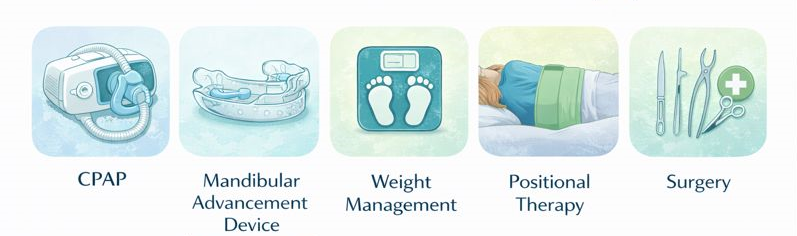
CPAP (continuous positive airway pressure): A CPAP device delivers a continuous flow of air to help keep your airway open while you sleep. You wear a mask connected by a hose to a machine placed next to your bed.
Mandibular Advancement Device (also called oral appliance): An oral appliance that resembles a mouth guard and is worn in your mouth while you sleep. The device helps to prevent your airway from collapsing by sliding your jaw forward.
Weight Management: Losing weight can sometimes reduce the size of your neck tissue and improve or eliminate sleep apnea.
Positional Therapy: Some people only have sleep apnea when they sleep on their back. There are devices that you can wear to help you stay on your side during sleep.
Surgery: There are several surgical procedures that can be considered if you are unable to use a CPAP or a mandibular Advancement Device.
1. Hypoglossal nerve stimulator: This implantable device sends electrical impulses to the hypoglossal nerves. This stimulates the tongue to move forward during sleep rather than relax and block the airway.
2. Other types of surgery: These include removing extra tissue in your throat that can block the airway and adjusting the bone structure of your jaw, nose and face
When you meet with the interventionist, you will learn more about your sleep apnea treatment.
module 3 page 4